Carp Fishing
How to Map a Carp Swim: Feature Finding That Helps
How to use a lead (and a marker if you need one) to find depth, silt, gravel and weed, then put a hookbait on a spot you can hit again.


The question is not "what is the best boilie?" It is "how much of it belongs in this swim, today?" Most blanks that get blamed on flavour are baiting errors, such as too much for the temperature, too little for the stock, or feed going in when the fish are not on the bottom.
Which baits to use is a separate decision. This is about quantity, timing and delivery, and how to tell whether the fish are responding.
Before a bait goes in, you need a rough answer to four things:
If any of those are uncertain, start small. A PVA bag or a handful of free offerings around a hookbait. You can always introduce more. You cannot take it out.
Almost every session fits one of these. Mixing them by accident is how you overfeed a cold swim or underfeed a hungry one.
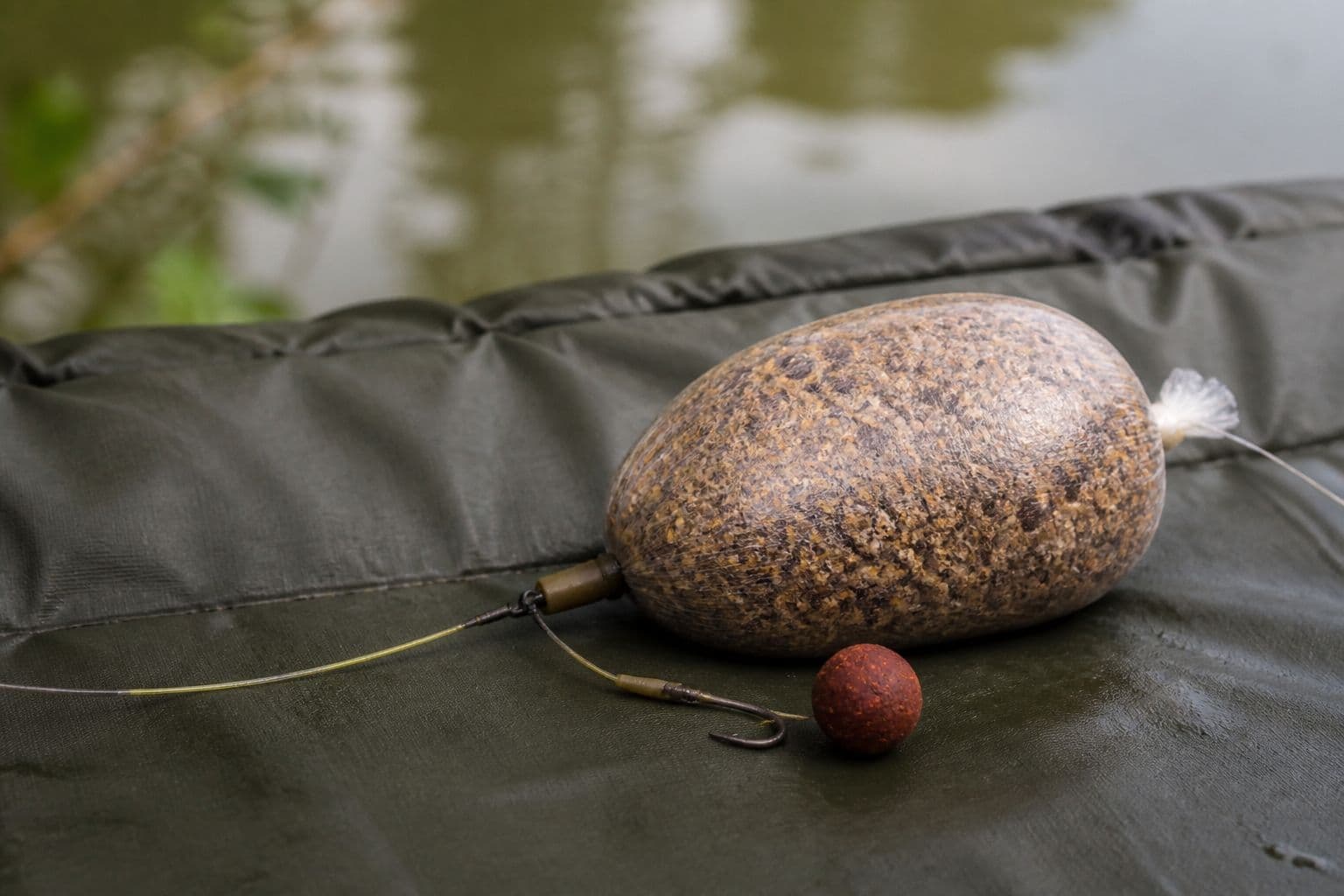
A hookbait, maybe a bag of crumb or a few matching freebies. Used when:
This is also the right call for the first hour on a new swim. If they show over it or you get liners, you have permission to move to mode 2.
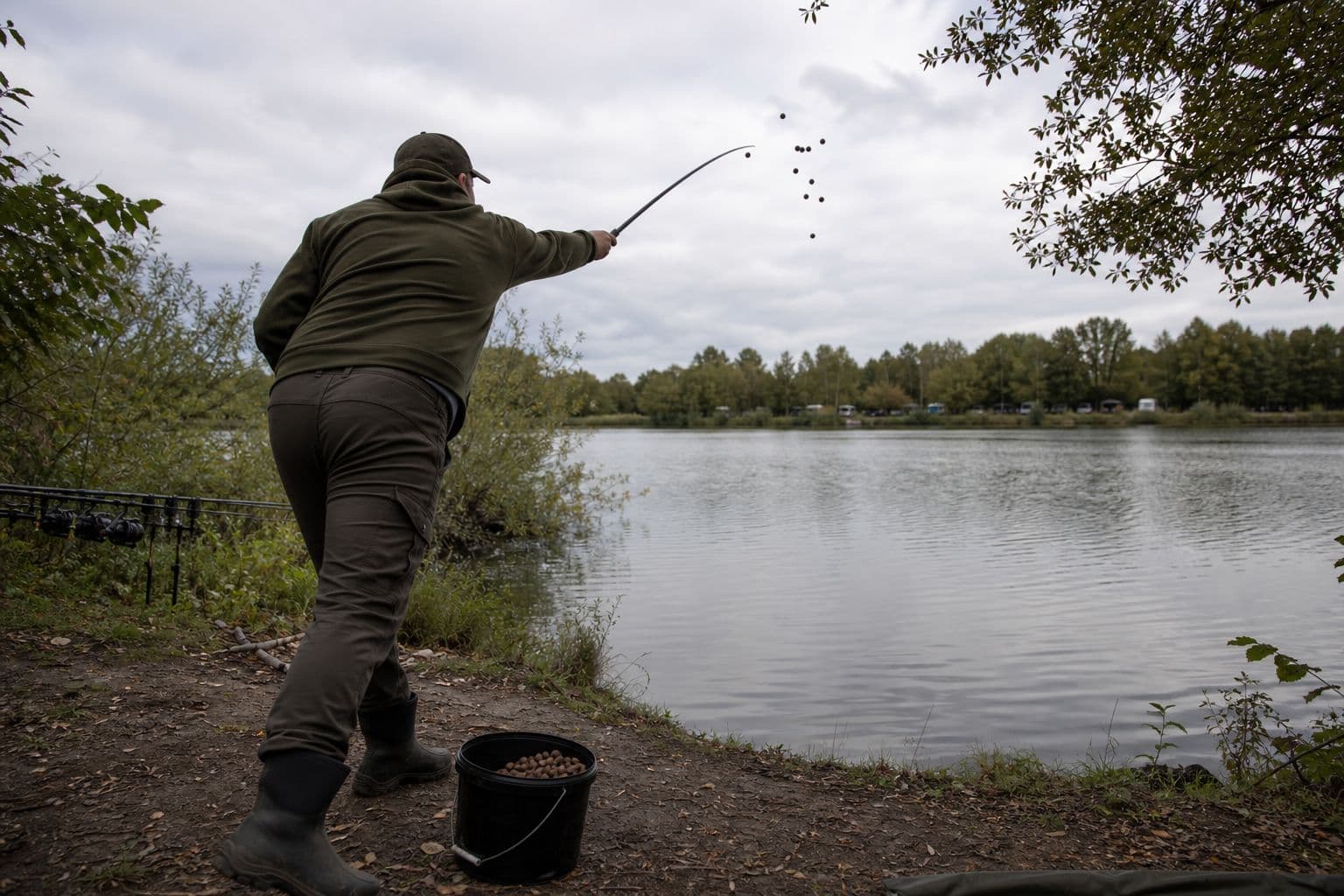
A small amount, topped up when you have evidence they have been. Catapult, throwing stick, or a couple of spombs, not a bombardment.
Used when:
The skill is the top-up. If you have had a fish, or bubbling, or the spot has been cleaned (you can sometimes see it in the edge, or you feel a cleaner drop on the lead), add a similar amount to what you think they ate. If nothing has happened for hours, adding another two kilos is not "giving them something to eat". It is hoping. Recast the trap, or change depth, before you double the feed.
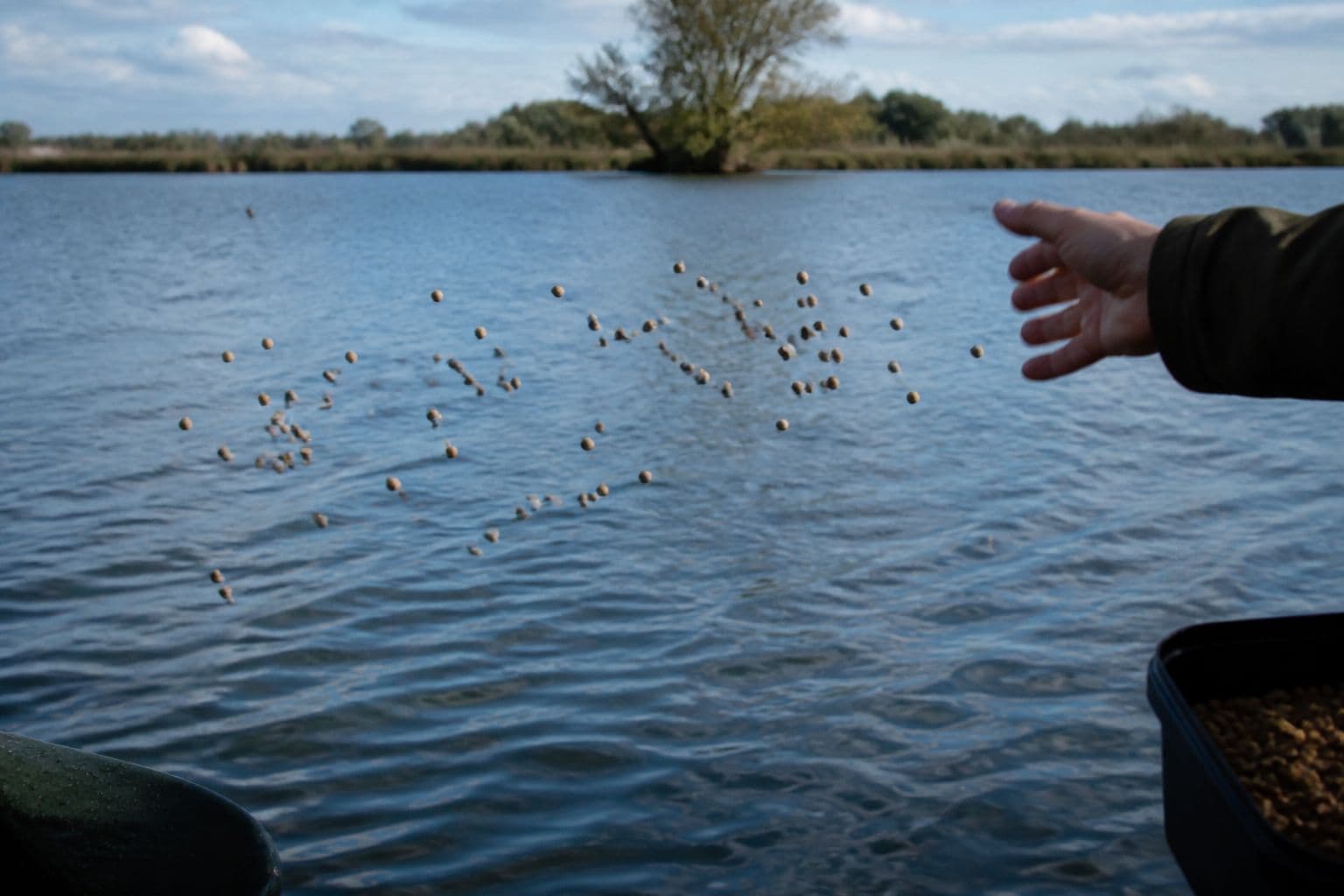
Enough bait that fish arriving later still find food. Spod or spomb work, or a heavy stick in range.
Used when:
Building a spot before you have seen a carp on a new lake is a gamble. Sometimes it comes off on a runs water. On a moody venue it can kill the swim for the rest of your ticket. If you do it, keep the first hit tighter and smaller than your confidence wants, then build only on evidence.
You cannot see 40 metres of silt. You can still gather clues:
No clues for several hours in good conditions means the fish are not on that bait, or not on that spot, or not on the bottom. Do not "give it another kilo to draw them in" as the first change. Change location or depth first. Reading the lake still outranks the bucket.
Accuracy beats volume. A kilo in a 2-metre patch will be found. A kilo scattered over half a swim is a rumour.
Hemp, maize and tiger nuts hold carp grubbing because the items are small and they take time. They also must be fully soaked and boiled before they go in the lake. Dry particles take up water and can swell in a fish's gut. That is a welfare issue, not a preference.
The pattern is always the same. Soak in plenty of water (hemp often overnight, maize and tigers longer), boil until soft (hemp until many seeds split and show a white shoot), then rest in the cooking liquor. Canned sweetcorn is already prepared. If a lake bans particles, that is the end of the discussion.
Never introduce a particle bed on a short session unless you know they want it. Hemp that sits uneaten is a stain on the spot for the next angler, and it can sour.
Baiting is a conversation. The lake answers slowly. The anglers who get this right are not the ones with the biggest bucket. They are the ones who wait for an answer before they shout.
When you want to try this on a water that actually has the stock to respond, search carp lakes or start from carp fishing in Romania. Look at whether the listing is a busy runs lake or a specimen water. That single fact should change how much you take out of the bag.
How much bait should I use on a day session? Start with a bag or a handful. Top up only if you get signs or a fish. A day ticket is a trap or a graze, almost never a build.
When should I use a spomb? When you have time, stock, and a reason to put a quantity of bait on one spot at range. Not as a greeting, and not over showing fish.
Is little-and-often always best? It is the best default when you are unsure. On a hungry, well-stocked lake in autumn, a proper bed can out-fish drip-feeding. Let the lake vote.
Do I match the hatch with the lake's usual bait? If a water is flooded with one boilie, using it can help because the fish are already eating it. It can also mean they are careful with it. A matching bag of crumb with a slightly different hookbait is a common way to sit on their food without looking identical. There is no law; there is testing.
What if I overfeed? Stop adding. You can rest the swim, fish a single over the top, or move. You cannot vacuum the lake. Next time, start smaller.

About the author
Alex Marin
Carp angler & contributor
Alex has carp-fished for more than 20 years on private lakes, reservoirs and rivers in Romania and across Europe. He writes about the tactics that actually get used on the bank.
Margin Fishing for Carp: Why Close Range Catches More
How to fish the edge for carp, from stealth and baiting the near margin to when close range beats the long chuck, plus the mistakes that spook fish under your feet.
How to Map a Carp Swim: Feature Finding That Helps
How to use a lead (and a marker if you need one) to find depth, silt, gravel and weed, then put a hookbait on a spot you can hit again.
Cookies on LakeBooking
We use strictly necessary cookies to sign you in and process payments securely. Optional ones (interactive maps and referral attribution) only run if you agree. Details in our Cookie Policy.