Carp Fishing
How to Map a Carp Swim: Feature Finding That Helps
How to use a lead (and a marker if you need one) to find depth, silt, gravel and weed, then put a hookbait on a spot you can hit again.


Carp do not read forecasts. They feel water temperature, light, oxygen and the way the surface is moving. The useful skill is not memorising "south-westerlies are good". It is turning tomorrow's weather into a swim, a depth and a baiting plan, then changing that plan when the day does something else.
If you only remember one sequence, make it temperature trend first, wind second, pressure and light third. Location still comes from reading the lake. Weather tells you which page of that book to open.
Carp are a warm-water fish. They feed most consistently when the water is roughly in the low-to-mid teens °C and rising. As it drops, they eat less often and over a smaller area. In very cold water they still get caught, but the window is short and the baiting has to shrink with it.
You do not need a laboratory. A cheap thermometer on a cord, dipped at first light and again in the afternoon, tells you more than the air temperature on your phone.
What to do with the number:
Air temperature overnight is a hint, not the water. A 22°C afternoon in April can still sit over 12°C water. A 10°C dawn in September can sit over 18°C water that fished all night. Dip the thermometer.
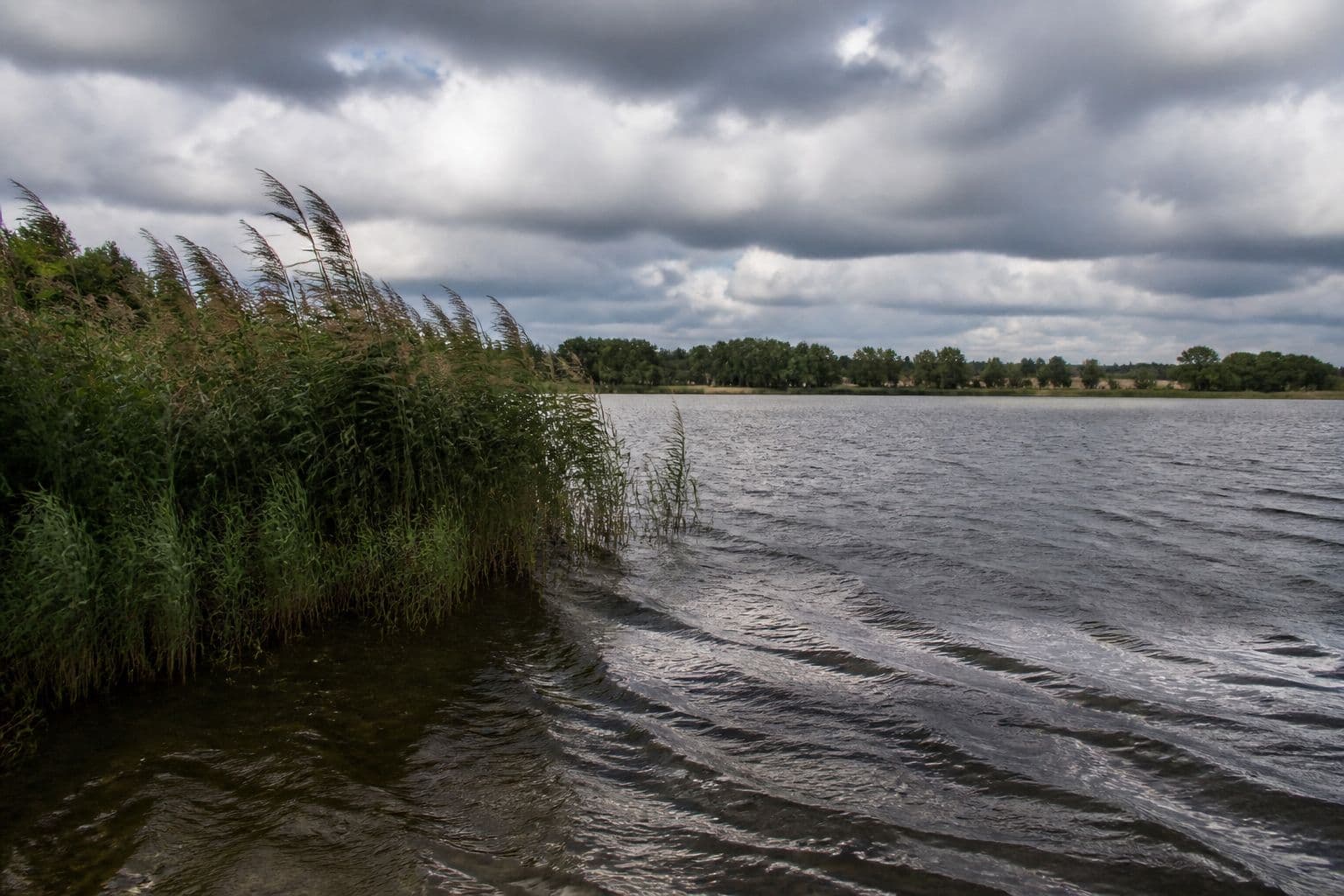
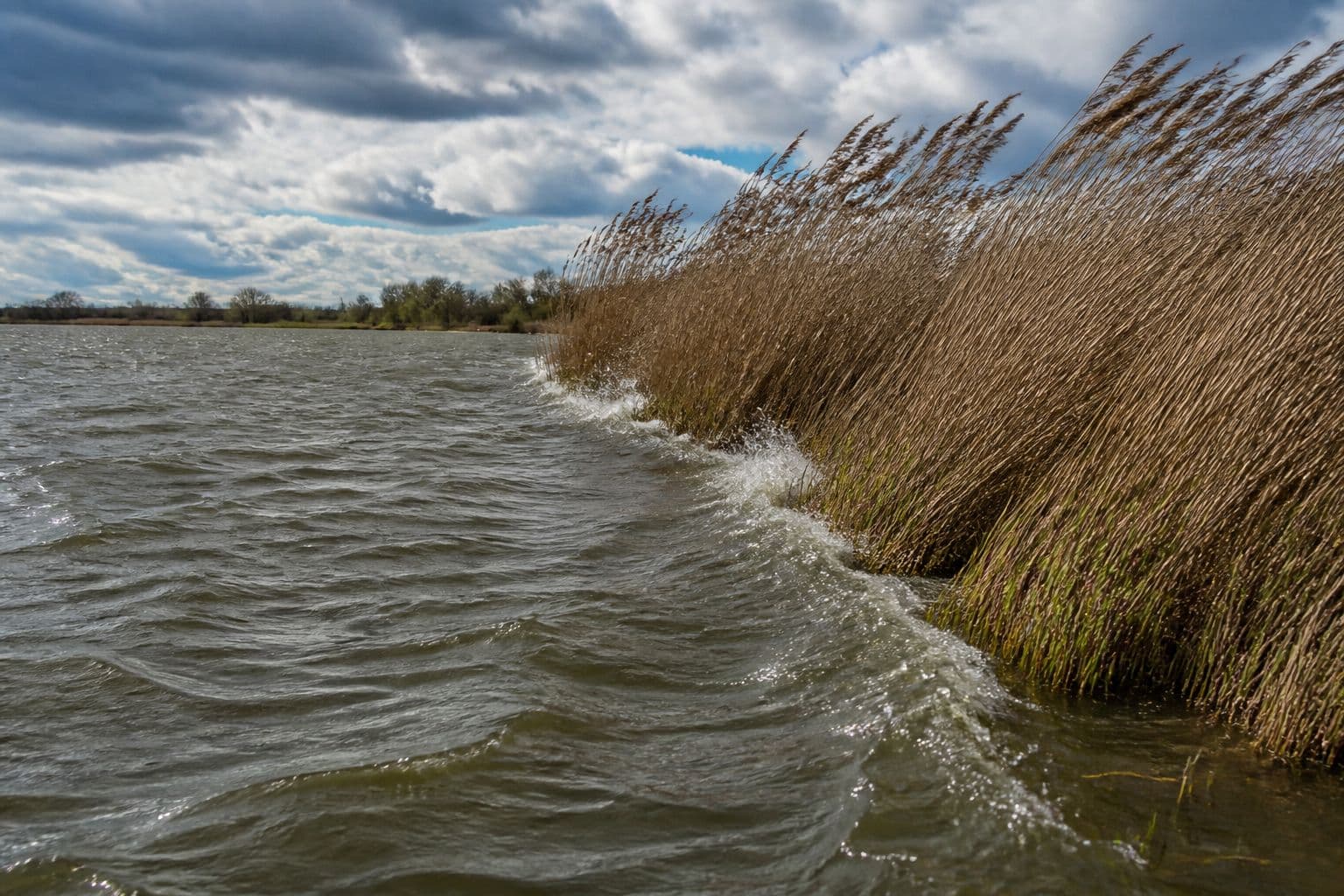
Wind moves the surface layers. In warm months those layers carry food and a little extra oxygen onto the bank the wind is hitting. Carp follow a mild, newly established wind. That is why "fish the windward" is repeated until it sounds like folklore. It is not folklore. It is also not a law.
| Condition | Typical carp response | What to do |
|---|---|---|
| New mild S/SW/W wind | Fish push onto the windward features | Fish into it, on the first decent feature, not necessarily the end bank |
| Same wind for 3+ days | That bank may be fished out; fish drop off or slide along the sides | Try the second swim back, or the flank |
| Cold N/E wind, especially spring | Warmest water is often in the lee | Fish the sheltered, sun-facing bank |
| Strong, dirty wind | Fish may sit just off the coloured, crashing water | Present on the edge of the colour, not in the washing machine |
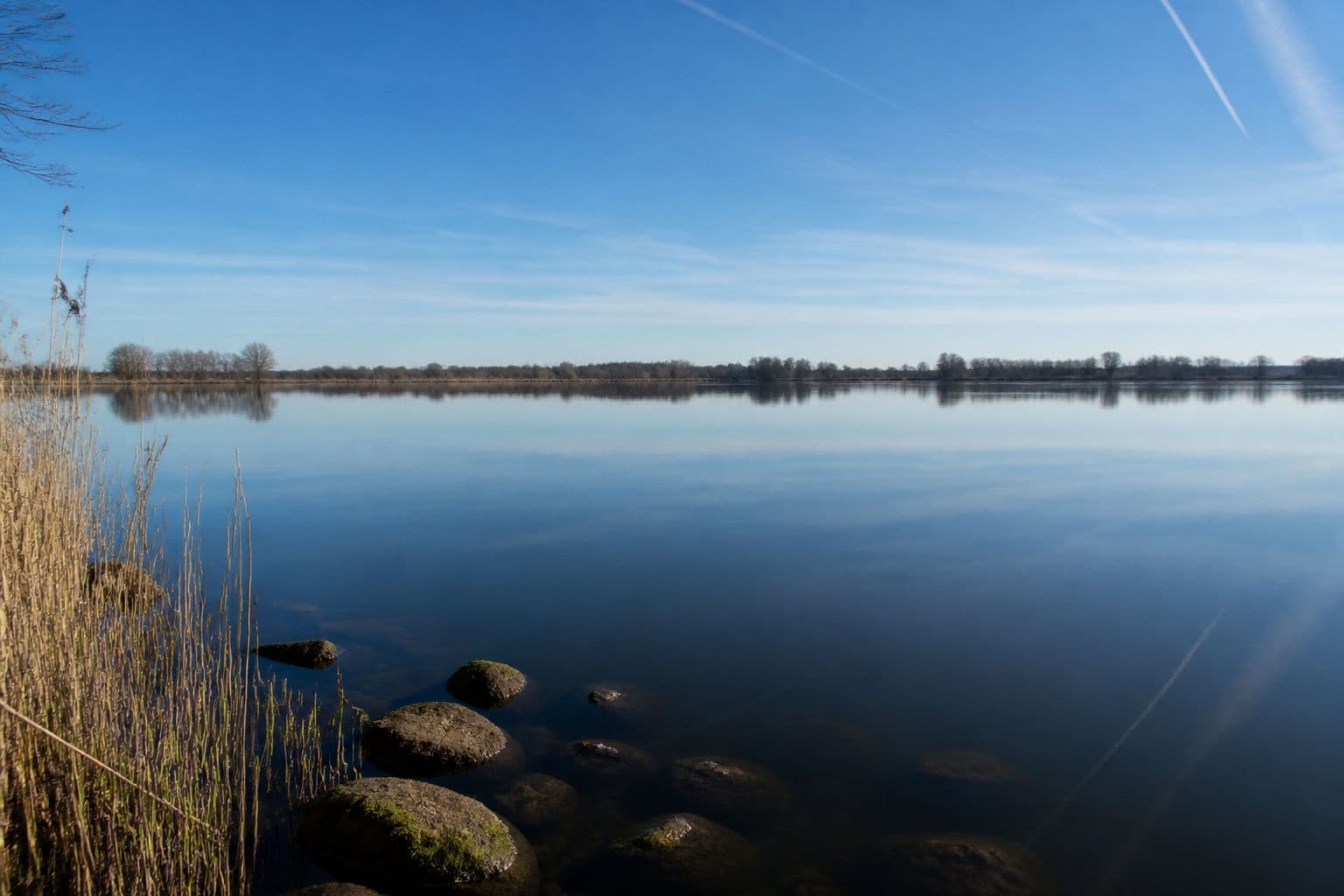
| No wind, high sun | Fish often sit up in the water or in shade | Zigs, margins, wait for cloud or evening |
Fishing into a warm wind is unpleasant, with spray on the lines, debris on the spool and harder indication. That is partly why it still works on busy lakes. Fewer people want that swim.
If a new wind is due overnight and you are on a 48-hour ticket, it can be worth sitting on the bank it will hit before it arrives. Carp move onto it quickly. You do not need to watch them arrive if the forecast is clean.
Anglers argue about millibars because it is something you can screenshot. The pattern that holds up on stillwaters:
You cannot control this. You can match the method, with bottom baits and a bit of feed when they should be down, and single bright hookbaits, zigs or close-range stealth when they should be up. The four rigs that cover those jobs are in carp rigs explained.
Warm rain is one of the better feeding triggers carp fishing offers. It knocks terrestrial food in, oxygenates the surface, and puts a dimple on the water so fish move with less caution. A muggy, drizzly day on a well-stocked day-ticket can out-fish a postcard sunset.
Cold rain on already-cold water is different. It can flatten a spring session. Stay, but fish as if it were winter, with less bait, better spots and more patience.
Thunderstorms cut both ways. The hour before a summer storm is often electric; the hour after a violent dump of cold rain can be dead until the lake settles. Lightning is not a fishing problem, it is a safety one. With carbon rods, open water and trees around you, get off the skyline.
The night before:
On the bank, the forecast loses to what you can see. If they are crashing in the edge on a "zig day", you fish the edge. Weather is a prior; shows are evidence.
The forecast was a textbook warm wind and you caught nothing. Usual reasons:
Change one thing at a time, first depth (zig vs bottom), then range (margin vs the obvious cast), then swim. Changing all three at once teaches you nothing.
Weather only helps if you can choose a swim that matches it. Browse carp lakes, filter search by carp, or start from carp fishing in Romania. On an overnight, look at the forecast through the booking, not just the afternoon you arrive. A 24-hour ticket that starts into a new wind is a different session from one that starts on the back of it.
What is the best weather for carp fishing? A mild new wind, cloud, and water temperature that is stable or rising. Low or falling pressure helps bottom feeding. Bright, still, high-pressure days are harder on the deck, not impossible.
Do carp feed better in the rain? Warm rain often helps. Cold rain on cold water often does not. Fish the rain; do not assume it.
Should I cancel if it is high pressure? No. Change method instead, with zigs, close range, less bait and a later start in the day. High pressure blanks are usually method blanks.
Does wind direction matter more than strength? Direction and temperature of the wind matter more than a moderate breeze versus a stronger one. A howling cold easterly is not the same as a howling warm south-westerly.
Do I need a barometer? A phone forecast with pressure trend is enough. The thermometer in the lake is the tool that actually changes decisions.

About the author
Alex Marin
Carp angler & contributor
Alex has carp-fished for more than 20 years on private lakes, reservoirs and rivers in Romania and across Europe. He writes about the tactics that actually get used on the bank.
How to Read a Carp Lake: Find Fish Before You Cast
Watercraft for carp explained. How to walk a lake, read shows, wind and features, and pick a swim with a reason, not because it is next to the car park.
Margin Fishing for Carp: Why Close Range Catches More
How to fish the edge for carp, from stealth and baiting the near margin to when close range beats the long chuck, plus the mistakes that spook fish under your feet.
Cookies on LakeBooking
We use strictly necessary cookies to sign you in and process payments securely. Optional ones (interactive maps and referral attribution) only run if you agree. Details in our Cookie Policy.