Carp Fishing
How to Map a Carp Swim: Feature Finding That Helps
How to use a lead (and a marker if you need one) to find depth, silt, gravel and weed, then put a hookbait on a spot you can hit again.


Carp fishing looks complicated from the outside. Walk past a swim full of bivvies, bite alarms and spod rockets and it is easy to think you need a small fortune and a science degree before you can start. You do not. Carp are caught every day on simple gear by people who started last month. This is how to be one of them.
The single biggest thing in your favour as a beginner is the water you choose. Pick a well-stocked day permit lake with plenty of smaller carp and you will get bites. Bites teach you everything, from how a take develops and how a fish fights to how to play it to the net. A moody big-fish lake will teach you patience and not much else.
Our guide to the best carp lakes for beginners explains what to look for, and you can search beginner-friendly carp lakes near you on LakeBooking.
Keep it short. You can add to it forever once you are hooked.
A landing net and unhooking mat are not optional extras. A carp out of water is fragile, and protecting it is part of the deal. The glossary of fishing terms is worth a read if any of this is new.
Forget rig folders. Learn one rig, the hair rig, and learn it well.
That is it. The idea is simple. The carp sucks in the bait, the bare hook follows, and when the fish moves off the weight of the lead sets the hook. Tie a few at home, test that the hook flips and pricks your skin, and you are ready.
You do not need a bait company's full range. To start:
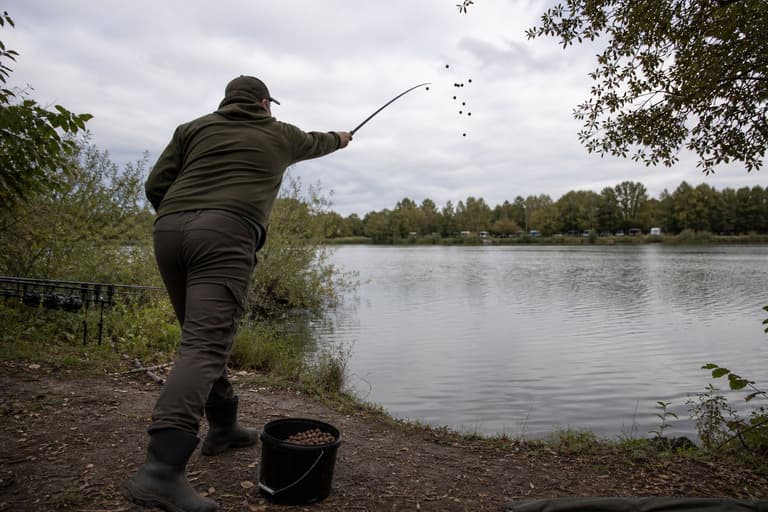
Catapult a small handful of boilies and pellet over your rig and top it up every few hours. Little and often beats dumping a bucket in on a small day permit lake.
Watercraft outfishes tackle every time. Before you cast:
Spend ten minutes walking and watching before you set up. It is the most useful ten minutes of the day. When you want the full method (shows, pressure, when to ignore the car park swim), use how to read a carp lake.
When the alarm screams, you do not need to win a fight in ten seconds. You need a bent rod and a clutch that gives line before the hook tears or the fish reaches a snag.
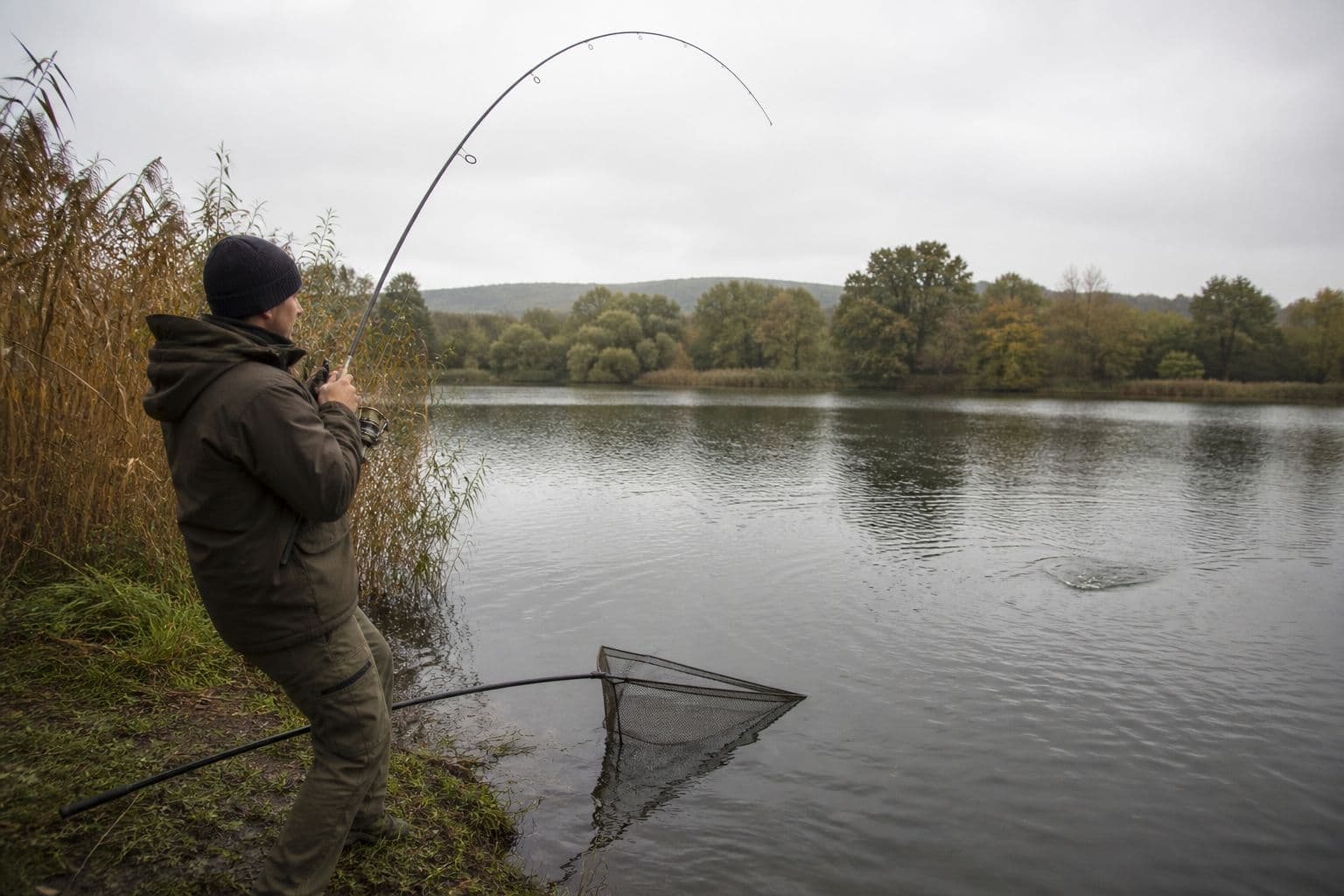
Then the net, the mat, and the rest of the handling below.
When the alarm screams, lift the rod, keep it bent and let the clutch do its job. Do not wind against a running fish. Guide it over a sunken, wetted landing net and lift. On the mat, keep the fish low, wet your hands, unhook it with forceps, treat the hook hold, take a quick photo if you want one, then hold it in the water until it kicks away strongly. That whole sequence becomes second nature after a fish or two.
The hardest part for most beginners is simply finding a friendly lake and knowing it welcomes newcomers. On LakeBooking you can browse carp lakes, filter by carp, read reviews, and book a day or overnight session. Start from carp fishing in Romania if you want a region first. Help pages on finding a lake and making a booking take you through it; at the lake covers arrival.
Before you go, read day ticket carp fishing for how permits work, and fishing permits in Romania so you turn up legal.
What gear do I need to start carp fishing? One carp rod and reel with 12 to 15lb line, size 8 barbless hooks, a few leads, plus a landing net, unhooking mat and forceps. That is enough to catch your first carp.
What is the easiest rig for a beginner? A simple hair rig with a single boilie. It is the rig most carp are caught on and it is forgiving to tie and fish.
What is the best bait for beginners? Boilies, sweetcorn and pellets. Use boilies as hookbait and free offerings, and feed little and often.
Do I need a permit to fish for carp? On a private lake you pay the venue's day permit. On public water you need a recreational fishing permit. See our permits guide.
How do I find a beginner-friendly carp lake? Look for a well-stocked day permit lake with plenty of smaller fish. You can search carp lakes near you on LakeBooking and read reviews before booking.
How do I look after a carp once I land it? Use a wetted unhooking mat, keep the fish low and wet, unhook with forceps, treat the hook hold, and return it once it is ready to swim off strongly.
How long should my first session be? A daytime session of four to six hours on a busy lake is ideal. You will likely get bites and learn fast without committing to a night straight away.

About the author
Alex Marin
Carp angler & contributor
Alex has carp-fished for more than 20 years on private lakes, reservoirs and rivers in Romania and across Europe. He writes about the tactics that actually get used on the bank.
Fishing Lake Permits and Taxes in Romania: 2026 Guide
The paperwork for a fishing lake in Romania in 2026, from water, environment and building permits and aquaculture registration to company and CAEN code, VAT, cash register and DAC7.
Fishing Permits in Romania: What You Actually Need
Private lake tickets vs the state recreational permit (ANPA, being merged into ANADSPA), close seasons, the Danube Delta, and how a LakeBooking booking fits in. Confirm the current rules before you travel.
Cookies on LakeBooking
We use strictly necessary cookies to sign you in and process payments securely. Optional ones (interactive maps and referral attribution) only run if you agree. Details in our Cookie Policy.